

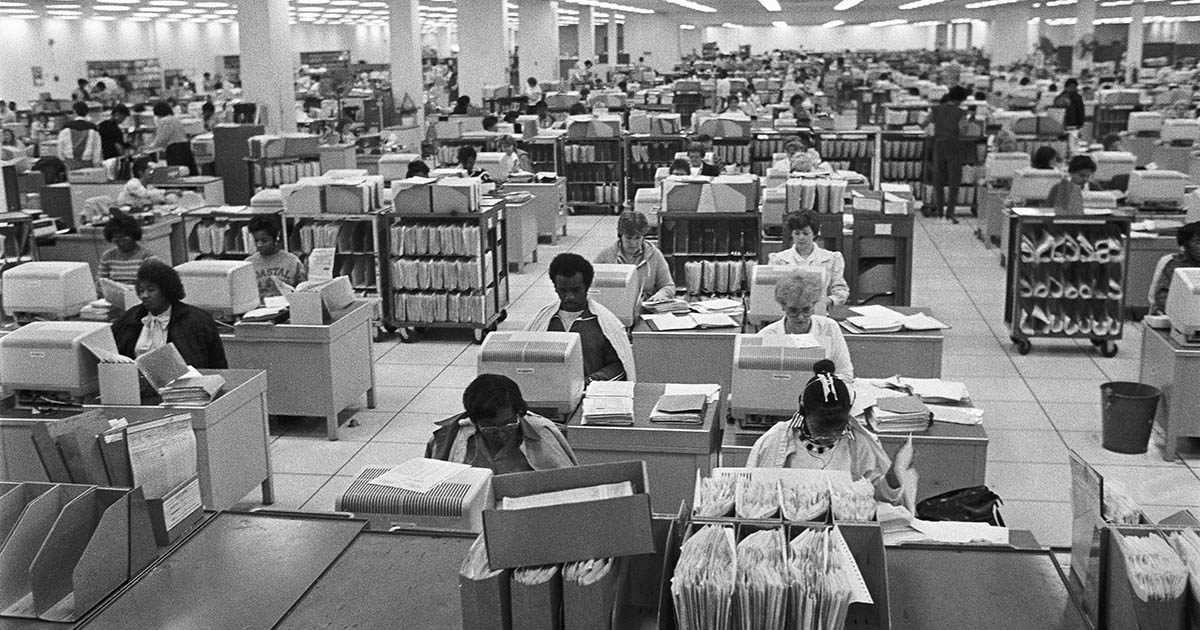
With Zohran Mamdani’s ascent to Gracie Mansion, a democratic socialist is now chief executive for the largest municipal bureaucracy in the United States, meaning that he oversees the daily activities of roughly 300,000 employees. Most of these employees are what the political scientist Michael Lipsky called “street-level bureaucrats”: the teachers, firefighters, cops, bus drivers, and others whose jobs put them into direct and regular contact with civilians. But they also include the urban planners, economists, analysts, and administrators who operate behind the scenes and at the higher echelons of city government: the people who help write the city’s budget, study traffic patterns, and run grant and incentive programs.
It is this latter category of civil servants that will be tasked with turning the cumbersome machinery of city government in the direction indicated by Mamdani and his political appointees. Implementing a sewer socialist agenda in New York City will be, to a great extent, an enormously complicated technical exercise, carried out by a small army of trained technicians.
You have bunch of things wrong.
The King and the Kingdom were not private property. This is critical for you to understand and to make sense of liberalism and history. Kings didn’t own anything. The kingdom was a sovereign, the king was identical with that sovereign, the king managed the kingdom to the benefit of the kingdom. It was essentially a managed commons system.
This is why the phenomenon of “enclosure” is such a critical turning point in history. What used to be common land, used by all the peasants and yeoman, became enclosed and privatized to be used only in exchange for profit making. It sent the peasantry into abject poverty in a matter of years.
The concept of something being held in common, or state owned is what we say now, was the dominant form of holding. Like today, no one owns the navy. You can’t buy or sell it. Similarly the king did not own the Navy. It was part of the country, it was for the common defense. Under the monarchy everything was essentially structured that way.
It was the emergence of private property as we know happened around the 16th century, long after the concept royal sovereigns were fully developed. It’s not possible to understand the history of private property and say that the crown/monarchy was actually private property and democracy made it public property. This is a fundamental misunderstanding of history and critical concepts for this discussion.
Private property created an opportunity to undermine the power of the monarchy. Instead of the power being the state, it could be imbued in the individual through private property. This was a direct assault against the crown’s power. Private property was a direct assault against the crown’s power. And thus, liberalism, followed by conservatism, is born. Liberalism challenged the crown with values of liberation and powers of private property and profit.
No. You are assuming that what we mean by markets here is the opportunity to start your own company. That’s not the opportunity I am talking about. I am talking about the opportunity to live in a shelter or eat food. Markets a rationing tools, and as rationing tools they are profit driven. This is why we cannot solve hunger with capitalism. If we produced enough food for everyone to not go hungry, then the price would fall below profitability. If we overbuilt housing so that everyone can afford a shelter, it means the prices are so low that there’s no incentives to build housing. This is how markets work. It’s fundamental.
No. They wouldn’t. By law they might, but not in reality markets are winner take all. They always tend towards monopoly because monopoly is efficient. Once all the land in a village is owned, the price of land in the village doubles. That means most people can’t participate in that land market anymore. Then comes consolidation. As individual land owners age out, and they want to sell for a profit, they have to sell to people with more money. The people with more money buy their own land and then buy the land of others, consolidating and creating more scarcity. That scarcity increases the value, and thus consolidation leads to 1 - 3 people owning everything in the village. If you know much about small towns in the US, you know that 1-3 families usually own the majority of them. Even in NYC there are more and more blocks that are owned by 1 or 2 landlords. So yes, by law everyone is allowed to participate, but that’s never been the outcome of markets in all of human history ever.
As we say, the poor and the rich are equally free to sleep under bridges. The poor and the rich are equally free to skip meals and eat from the trash. The poor and the rich are equally free to die in the cold.
Oligarchs have only ever emerged from democracy. There were no Russian oligarchs in communist Russia. Stalin died owning just a set of simple clothes, some household furniture, and a couple of paintings. Oligarchs in Russia emerged towards the end of the USSR, during the period of liberalization and became fully formed during the period of liberal economic shock therapy where everything was rapidly privatized. These things are written about extensively. Your perspective is not based on history but false narratives that Western liberals make up to maintain a sense of stable identity in the world.
Not exactly. The North made tons of money on the slave trade. Specifically the financiers, the insurance companies, and interestingly enough the universities. Harvard made a bunch of money on the slave trade. Wall St traders financed the kidnappings and lent money to slavers and built portfolios of common stock in the slave trade and in plantations and in the buying and selling the output of slaves.
The situation was not one of pure ideological difference.
In fact the war was fought to protect private property. The movement to abolish slavery was picking up speed during the industrial revolution because you can’t use slaves in industrial settings. The work requires the worker to be more engaged than you can achieve through slavery. So the North stopped needing slaves and instead needed freemen to work. Thus, because their economic needs were no longer tied to slavery, and indeed were antithetical to slavery, it made sense to get rid of slavery and create a larger pool of free workers. The South didn’t have industry, and abolishing slavery meant state intervention to steal their private property. Just like the king of England threatened to do before the colonists launched the revolution. Literally the king and the democracy both attempted to steal the private property of slave owners and the slave owners, believing in private property, fought back.
This is exactly what I mean. Liberalism is internally contradictory. It has values and it has a theory of power and the values are in contradiction with the theory of power. America is the quintessential representation of that contradiction. Both sides are liberals, but the ones we call Liberals are all about liberal values and ignore the theory of power and the side we call Conservatives are all about liberal power and ignore the values.
Consider Neoliberalism and Neoconservatism. Under Neoconservatism, we will bomb people and take over their countries in order to force private property and markets on them. Focus entirely on power. Under Neoliberalism we will demolish every government program even the ones that have broad popular support and privatize everything even if it kills people, we will eliminate public transportation to boost private market profits, etc. They are two sides of liberalism, they show us the contradictions.
What you’re after is liberation, and liberalism doesn’t offer liberation. We’ve seen it progress for 400 years. It doesn’t lead to liberation. That’s why communist theory emerged. The drive for liberation is ever present in us as humans, and when we live under oppression for long enough we discover new ways to liberate ourselves. Liberalism emerged to free white land-owning wealthy men from the oppression of royalty. The masses did not invent liberalism - the opulent minority did. That’s why the country’s founding fathers were the way they were. They were all rich international traders. They had no intention of giving women the vote. Hell, they had no intention of giving the masses a vote. In fact, they understood it was going to happen and they hedged against it by creating the Senate! They were liberals.
Communist theory emerged because liberalism failed to liberate the masses. I mean FFS, women got the right to vote in the 1920s and then 30 years later we were lobotomizing them for stress responses! The right to vote is not the end of oppression. It’s not even the beginning of liberation. It’s a specific right that doesn’t matter if you’ve been lobotomized. So communist theory emerged because liberal oppression replaced monarchical oppression. And it analyzed liberalism and found that the contradictions inherent in liberalism were structural. Communist theory took the values of liberalism and then asked “what theory of power would promote these values better”. And it found that it was in direct opposition to the theories of liberal power - markets and private property have to be eliminated as fundamental power structures and must be fully subjugated to the needs of the people.
This makes communism anti-liberal while simultaneously promoting the values of liberalism. Both liberalism and communism state that they value universal liberation and equality, but liberalism has not produced this and communism is a theory as to why. That’s why thousands of American women expatriated to the USSR in the 20s and 30s. That’s why 40 percent of the chemistry PhD’s awarded in Soviet Russia in the 60s went to women and during the same period in the United States, that number was a measly five percent.
Liberalism has failed to live up to its values after 400 years. Liberalism was in charge under some of the worst atrocities in human history. Liberalism failed to liberate, because despite its values, liberation is about power, not ideas. Liberal power is not emancipatory, it’s elitist. Liberal values are emancipatory, but without the power, they are just window dressing. Communist power structures are emancipatory, and we see that with every experiment - the end of the cycle of famines, the massive poverty alleviation, the democratic structures integrated into every layer of life.
If you’re committed to the highest values of liberalism, you should consider the critiques of liberalism from the left.
https://jacobin.com/2020/10/karl-marx-liberalism-rights-igor-shoikhedbrod-review
Right…
I guess the royal family don’t “own” Buckingham Palace and they never did. They just have full and exclusive control over it. I wonder why homeless people in a sovereign were never offered shelter under a palace roof? Why sleep in the palace when they could they could just die in the military on behalf of their benevolent queen?
The same rules would apply if a president declares himself dictator, and used his authority to line his pockets via privatization of government agencies and public services under vague claims about efficiency and getting rid of beuracrats on behalf of the American tax payer.
The hospital was inefficient, so we let the horse loose and told him to go nuts. Why bother to fix a broken system when you can just destroy, and take away any public control?
He could even plate the White House in solid gold with taxpayer money, refuse to ever leave, and use the military to ensure nobody makes him leave. Just like the queen, he also doesn’t “own” the White House, he just has full and exclusive control over it, while the public has control in name only and continues to foot the bill.
Then whoever becomes dictator after him and refuses to leave also wouldn’t “own” it. Nice loophole!
Stalin didn’t own the collective, but when he decided to seize agrarian peasant land and let them die in a famine (while suppressing word of what he was doing from reaching his working class base in cities) he was doing it for the collective. Not for selfish reasons like maintaining power and control. The collective just didn’t need to know all the details about what their benevolent leader was doing for their sake and the sake of the entire Soviet Union.
The road to hell must be paved with state sponsored abuse of authority and terrorism that disguises itself under a mask of benevolent patriotism. Just trust that even as your rights and liberty are being stripped away, along with any public control or autonomy, the authority is simply doing it for your own good. For the common good 😊
There’s one very real sense in which a homeowner today owns their home more than the royal family owns Buckingham Palace - the homeowner can sell their home.
This is a good example of how private property differs from historical forms of property. The king was not allowed to just buy and sell royal palaces, flipping them for profit. This is also true for the nobility in monarchical societies. The king could entitle someone with land, but they didn’t sell it to them and the noble couldn’t then turn around and sell it for a profit. The merchants, however, hated this, because it meant that the government was in the way of making profits. This is what makes private property different. If you continue to insist that monarchies were based on private property and that democracies are not, you are going to arrive at completely incorrect conclusions because your analysis is based on fundamental misunderstandings.
The reason was not private property. Homelessness really started being a problem in England around the late 1300s and there wasn’t that much private property then. Back then, none of the people owned any land and all of the land was part of the kingdom and the nobility was entitled. No one was buying and selling land and houses and such for profit. It was feudal society, and serfs worked the land they lived on in exchange for the rights to live on it. The nobility sold the commodities they produced, but the land itself was relatively open and unenclosed. The Black Death destroyed a ton of social relations and lots of people became homeless. But that was event driven, not structural.
Structural homeless emerged under mercantilism. The drive for profits and the emergence of private property in England converted previously common land, entitled to nobility for the caretaking of for the whole country, into profit-driven enclosures. The nobility fenced off the land and filled them with sheep to produce wool for the market. Suddenly, homeless in London jumped to 6-times as bad as it was in NYC in 2000. The only solution to the problem ended up being sending the homeless to the Americas as colonists.
Private property creates scarcity, not abundance. I’m not arguing for the return of the monarch nor arguing that the crown was benevolent. I’m saying that feudal society was not organized around private property and in fact private property as we know it did not exist, almost at all, until the 1600s and when it emerged in Europe the effect was actually increased wealth disparity and poverty and mass migration of poor citizenry to the colonies in search of more abundance (at the expense of the indigenous inhabitants).
Again, no. The United States Postal Service is a government enforced monopoly. DHL, FedEx, UPS, and other delivery services are expressions of free market competition. If the president decides to privatize the USPS so that the market can deliver the mail, that’s liberalism. It’s the very definition of liberalism. The USPS being a government enforced monopoly is nearly identical with the Royal Mail being a function of the crown. It’s ILLIBERAL, by definition of what liberalism is, and you KNOW this because as you stated, it’s the open market and unfettered competition that is liberal and it’s the government interference and enforcing monopolies or oligopolies that is against liberalism.
You are literally running up against the contradictions of liberalism in your own analysis, you just don’t see it yet.
Hospitals in the US were never under public control. The liberal solution to public goods was always to have private philanthropy and charity. The Catholic Church is the largest non-governmental healthcare provider in the world. And liberal market competition states that if the catholic church does a bad job at it then other organizations can compete with them and do better. The problem with hospitals was not that they were inefficient. The problem with hospitals is that they were generating revenues but not generating profits to shareholders. Again, liberalism emerged from mercantilism, and the first issuance of common stock was a way to raise private capital without the crown - private property - and the logical extension of this is that if a hospital is generating revenue, then there might be a chance for it to generate a profit and therefore we can convert the hospital into a publicly traded company and raise private capital by having private investors invest their money in an efficient capital market to buy a share of the hospital to fund its development and operations and in turn the hospital can return profits to the individual investors - all without any government involvement. And you know how that turns out. Again, that’s free market competition with individualist “meritocracy” running the show. And what it results in is scarcity, not abundance.
Remember your basic economics. Price as a function of supply and demand. If supply far exceeds demand, prices crash to zero. If prices crash to zero, you can’t generate the revenue needed to operate. Therefore, if you’re going to use markets, you must have sufficient scarcity to generate a high enough price to maintain operations, and what that means is that some people MUST go without.
Yes. The USSR was abolishing private property at that time. The Kulaks owned their farms under a private property regime. The USSR enacted forced collectivization - they ABOLISHED private property. That’s literally what they were doing. Your argument that somehow this was the same as privatization and the antithesis of democracy shows just how broken your understanding is. The Kulaks that you are arguing favor of were relying on the private property regime for their claims to the land and the USSR was abolishing those private property claims. The Kulaks were liberal, and the USSR was illiberal.
However, the history of famines in the region is very clear - the region suffered catastrophic famines every 6 years for over a century. The USSR’s decision to collectivize the farm land was a decision in the service of ending the cycle of famines. It took about 20 years, but they did achieved it. They managed to increase the food supply by leaps and bounds through collectivization and mechanization. The Kulaks, in protest of collectivization, chose to burn their food stores and slaughter their animals and let them rot. Literally. The people who owned the private property, on the philosophical basis that they had the freedom to do so given to them by private property, chose to DESTROY THE FOOD PEOPLE RELIED ON because the USSR abolished their right to profit from their private property. And again, you have correctly identified the Kulaks as your current ideological peers, that is to say, they were liberals as you are, but surely you don’t think that destroying food in a region that suffered regular famines for over a century was the correct course of action.
After the USSR ended the root cause of famines in the region, they immediately were facing an existential war against the Third Reich. The next famine that hit the region was caused by that war. After they won the war, the USSR became the second most well-fed country in the world. That’s directly from the CIA’s research. So yes, the government of the USSR was in fact focused on the national scale problem of famine, food scarcity, nutrition, and distribution and they did in fact solve that problem for the public good and they did so espousing the liberal values of universal emancipation while rejecting the liberal power of private property.
But you don’t even HAVE to believe that it was good. You really don’t. You just have to understand your fundamental error in your analysis. You need to read about liberalism and private property. Get started by letting a.i. just summarize the readily available sources for you. Try this prompt: explain the link between liberalism and private property
Don’t only take my word here. Actually research your beliefs. Challenge your assumptions.