

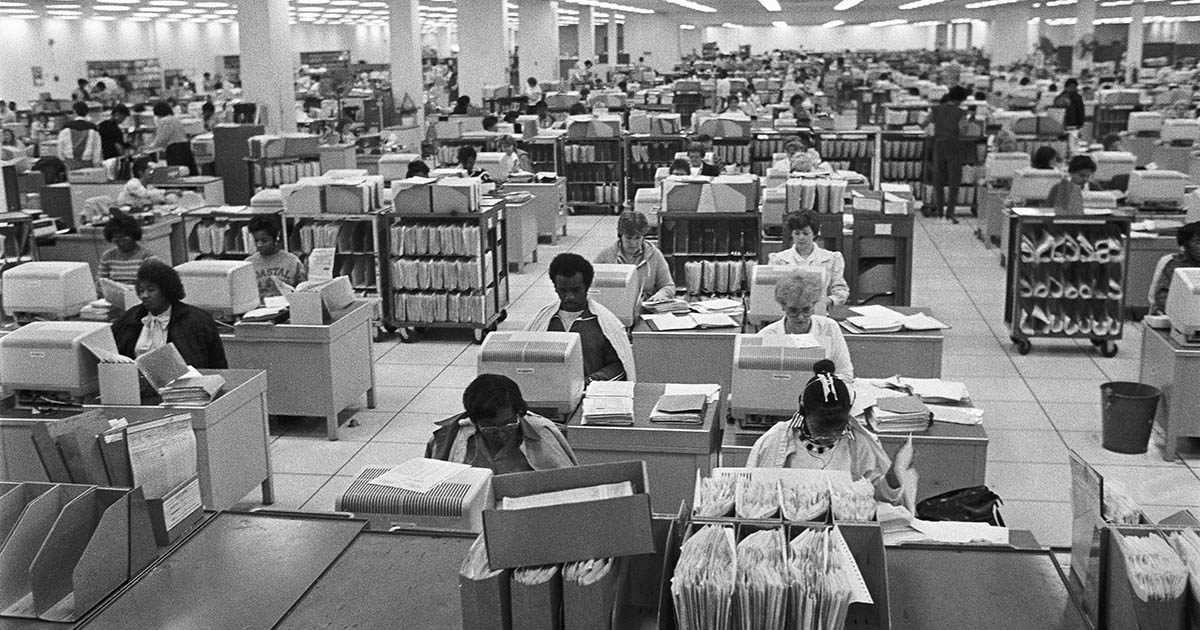
With Zohran Mamdani’s ascent to Gracie Mansion, a democratic socialist is now chief executive for the largest municipal bureaucracy in the United States, meaning that he oversees the daily activities of roughly 300,000 employees. Most of these employees are what the political scientist Michael Lipsky called “street-level bureaucrats”: the teachers, firefighters, cops, bus drivers, and others whose jobs put them into direct and regular contact with civilians. But they also include the urban planners, economists, analysts, and administrators who operate behind the scenes and at the higher echelons of city government: the people who help write the city’s budget, study traffic patterns, and run grant and incentive programs.
It is this latter category of civil servants that will be tasked with turning the cumbersome machinery of city government in the direction indicated by Mamdani and his political appointees. Implementing a sewer socialist agenda in New York City will be, to a great extent, an enormously complicated technical exercise, carried out by a small army of trained technicians.
You seem to be confusing my opinion differing from yours with me being “confused.” I’ll assume this is just a simple misunderstanding, because as a member of the reality based community, I really don’t like when people try to gaslight and create other people’s reality for them. It’s kind of a shitty and manipulative thing to do.
This is still America, at least until THEY destroy it, and it’s important to me that we’re still allowed to disagree even if you don’t see things that way.
Apologies. What I meant was that you are confused about what your enemies are doing. That’s a reality. They are not destroying the foundations. They are returning to the foundations.
Yes, the land built on indigenous genocide by European settlers. You need to remember what happened in the 1970s AIM trials - the US judges ultimately based their arguments on the Doctrine of Discovery, literally they word of the pope saying that the savages in the world could be enslaved, assimilated, and killed if they resisted. I know 50 years feels like a long time ago, and that it probably your enemies that made that argument, but Ruth Bader Ginsberg wrote a majority opinion for SCOTUS and literally said the same thing - US territorial claims are founded on the Doctrine of Discovery.
So yes, it’s still America. A euro-centric white supremacist capitalist patriarchy. That’s reality.
Your enemies, the Trumpers and ICE and whatever, are not trying to destroy America. They are trying to reform it and bend it back to the foundations of genocide, enslavement, mass murder, environmental extraction, etc. Reconstruction and Civil Rights were REFORMS on top of that foundation. And it didn’t get very far - the cops still killed black people without any consequences, black people were still disproportionately in prison doing slave labor, the US was killing millions around the world and both parties supported it as did the news papers and technology companies.
These are not differences of opinion. These are historical facts, from before the founding to the actions of Democrat presidents and politicians literally up to the present day.
You’re right and we don’t have a difference of opinion on the historical facts, but we do disagree on why previous attempts to repair the foundation have failed to prevent future attacks, and who actually benefits most from burning it all down and stripping away the rights and protections oligarchs have been fighting against for hundreds of years.
How the south won the civil war: Democracy, Oligarchy, and the fight for the soul of America
I very much agree with Richardson, and believe the battle of oligarchy against democracy is easily traced to the origins of not just Trump, but also the national conservative movement and Project 2025.
I think we partially agree here, but I think you’re ignoring the fact that there has always been pushback by Americans against oligarchy and hypocrisy in favor of democracy, and that by downplaying or pretending that pushback and rebellion against the hypocrisy didn’t exist, you’re ignoring very important social battles fought following the civil war and the civil rights movement, and you’re inadvertently accomplishing the goal of the New Right/Nat Cons, which is to argue that some fictional idealized past they seek to return to, was a past that ever existed.
The founding fathers signed their names to paper documenting their hypocrisy, but they didn’t build this country. This is not their country and it never will be. Slavery built this country, women built this country, marginalized people built this country and fought very hard for the rights they knew they deserved. Immigrants who came in different waves faced and continue to face backlash and discrimination, yet with each new wave they continue to build this country and make it great.
After the civil war and following the civil rights movement the Republican party embraced the southern strategy and a (failed) Goldwater campaign for presidency. From there the roots of the Heritage Foundation and Project 2025 begin to emerge, and although the origin of the new right movement is often associated with the pro life movement, this is incorrect. The Heritage foundation and the moral majority can be traced to Bob Jones University and anger over the fact that the federal government would not grant segregation academies tax exemption status.
The founder of heritage and the new right movement Paul Weyrich, literally stated in 1999, that he had accepted conservatives had lost the cultural war, but believed the failure of the movement was in trying to change American institutions rather than creating new conservative institutions. In 2001, his mentee at the Free Congress Foundation helped him compose the conservative manual The Integration of Theory and Practice
2024 The Radical Mind: The Origins of Right-Wing Catholic and Protestant Coalition Building
Nice analysis! Yes, the contradiction between liberty and slavery is at the heart of liberalism. Liberalism, beyond its espousing of values, also has a theory of power. Because liberalism emerged in monarchical aristocratic societies, it inherently bears the shape of the . But it also emerged as an attempt formalize and abstract the changes that mercantilism brought about.
What this resulted in was a philosophy of individual liberty in opposition to the subjugation before a monarch, but predicated on the fact that individuals could go make fortunes through imperial adventurism. And in fact, while it stated in its abstract values “liberty for all”, it fundamentally seated power in private property, which was necessary because the only way to scale up mercantile adventures was through the raising of debts from as many wealth people as possible. Mercantilism is what ended driving the first ever instance of common stock.
Private property allowed land (and common stock in large adventures) to be pulled away from the control of the sovereign and aligned well with the abstract values around individualism. But it’s clear that liberty for all is impossible if power is seated in private property. The vast vast vast majority of humans do not own private property. They could not invest in mercantile adventures. They could not buy land to create breeding plantations. Liberalism has held this contradiction since its emergence.
Private property and liberty for all are contradictory. Obviously we see this with chattel slavery. But equally we see it with the robber barons, the great depression, the opium trade, the imperialism, the necolonialism, the oil theft, the CIA overthrow of elected governments in order to control oil and weatlh.
The values of liberalism are in contradiction with the mechanics of liberalism. This is why liberatory movements of the last 150 years have been revolutionary. Not because the desire is to burn everything down but because destroying the foundation of the power structure of liberalism is required to finally resolve the contradiction of liberalism and move into liberation - a movement that champions the values all humans intuitively understand while breaking from the systems of power that betray them.
To your original point, this is why we cannot merely corrupt the bureaucracy. You cannot merely put good people in the Senate. It’s impossible. The Senate is structurally minoritarian. It privileges land over people. It enshrines the power mechanics of liberalism which are in contradiction with its values. The only solution for the Senate is abolition. That would require a wholesale change to the Constitution. But then you’d have to do it 51 times, because the states all replicated it in their constitution. And that’s just one bureaucratic structural issue. You’d still have to deal with common law, which privileges owners over the masses. You’d have to deal with private property law, which privileges owners over the masses. You’d have to deal with intellectual property law. And on and on and on.
It’s not the people in power that are the problem. It’s the structure of the power. The power structure was built by liberalism. The contradiction is not accidental, it is inherent. The solution is to remove the liberalism and move beyond it to the next phase of human society - a society that merges power and liberation together and actively structures itself around the resolution of contradiction, not merely the management of it.
So post liberalism?
Not sure what you mean by this? Liberalism simply promotes equal values and protections for everyone. Owning land isn’t inherently contradictory to liberalism as long as everyone is allowed opportunity to own land. When the law is abused to favor land owners in a society and prevent others from accessing the same opportunities, it is opposed to liberalism. However the laws that stack the deck in favor of land owners are typically created by anti-egalitarian conservatives to ensure wealth is maintained within the same families by passing estates down from one generation to the next without taxing them.
Taxing land is not only a liberal policy it’s one of the most justified forms of taxation along with inheritance tax, yet conservatives paint both forms of taxation as government tyranny. So filling the Senate with people who aren’t opposed to justified taxation would seem to solve that problem very quickly. Again, you seem to be inadvertently making popular arguments that are often used by the right when attacking liberalism.
Nudging Toward Theocracy: Adrian Vermeule’s War on Liberalism
No. That’s not all liberalism is. Liberalism specifically is a denial of monarchy, which is a power system, not merely a value system. Liberalism moved the seat of power from the crown to private property. That is a fundamental pillar of liberalism. Removing private property is illiberal.
Correct, but private property IS contradictory to the VALUES of liberalism, and since liberalism moves power from the crown to private property, liberalism is INTERNALLY contradictory. Let’s take a very simple example of a piece of land. The legal regime that enshrines private property says that if I own a piece of property, let’s say 100 acres of forest, I can deprive literally every single human being living now and that will ever live from the benefit of the land. I can kill them for trespassing, I can hire guards to kill people who trespass. And I am one person. There are currently 8 billion people on the planet. 370,000 people are born every day. Private property says I can deprive ALL of them of this part of the planet, and I can pass that ownership down to incorporated trusts or other family members and they can continue the deprivation.
This is obviously contradictory to the liberty of all from a pure logic standpoint, but the reality is that private property is co-developing as common stock is developing. So now the ultra rich can accumulate ownership of land they’ve never seen, touched, or have any relationship to, but they can still fund militias to kill anyone who tries to use the land. Liberalism is why the top 1% of wealth owners on the planet own more wealth than 95% of the world population. This is the logic of liberalism. It’s in-built. It’s not because they VALUE private property - although a lot of liberal schools of thought have moved private property up to the level of value - it’s because liberalism used private property to defeat monarchism.
The law isn’t being abused. It is being USED. Markets are rationing tools. They INHERENTLY prevent others from accessing equal opportunities. Rationing by markets means there absolutely must be a group of people who cannot afford the same amount as other people. Otherwise, it wouldn’t be a market, it would be quota. Markets and private property and wealth accumulation are expression of individualism, which liberalism values, and markets and private property are explicitly liberal power structures. That’s why when we see the elite trying to apply markets to everything under the sun we call it “neoliberalism”, because liberalism promotes markets as the power structure for distribution despite the fact that it does NOT afford all of society to access the same opportunities.
So in fact, when the law protects land owners, it is quintessentially liberalism. Liberalism is NOT populism, and in fact in every liberal society you will find liberal thinkers for centuries that argued against populism. Liberalism is NOT a mass liberation philosophy. That’s what communism is, explicitly (“the doctrine of the conditions of the liberation of the proletariat”).
See, this is why language drift is so dangerous, because it makes it so hard to have discourse and get everyone on the same page. Conservatism is a philosophy that emerged AFTER liberalism emerged specifically to reassert the monarchy. The Tories in the US revolutionary war were conservatives. They didn’t support private property as the seat of power, they didn’t support merchants rising to the top. They supported the king. It was the US revolutionaries that were the liberals, the ones what wanted to rule the land based on “merit” generally measured by who could earn the most votes and who could earn the most money and accumulate the most wealth. That’s liberalism. That’s rugged individualism. The people we call “conservatives” in the US are actually liberals in the philosophical sense. Both Democrats and Republicans support private property, support wealth accumulation, support defending private property with violence, and support markers as the means of distribution. These are the power systems of liberalism. The values are all wishy-washy and narrative. To the liberals of the American Revolution, individual freedom included the right to buy and sell slaves and no king was going to stop them from doing that. To the liberals of today, that’s distasteful, but so is abolishing private property or using the government to ration life necessities.
If you look at voting records, it’s the liberals in New York that stack the deck for land owners. In fact, if you look at every single state, it doesn’t matter what they call themselves, they stack the deck for land owners. Because that’s how liberalism plays out in the real world. It’s the foundation of liberalism - how does liberalism propose to promote its values? Private property and markets. The people who oppose private property and markets (communists) are considered illiberal and they are correct. The communists believe that liberalism is internally contradictory - decent values, rotten power structure. It’s illiberal to suggest that we can achieve the same or better values by abolishing private property and greatly curtailing the use of markets.
Again, you literally can’t because the Senate is structurally designed from the beginning to prevent this. This is such an important point. 60% of the population is only represented by 24% of the Senate. The Senate was design from the beginning, by the founders, to represent the interests of the land owners explicitly to prevent populism from truncating their private property rights. You would need to redo the constitution and completely change the way the Senate is elected, which would make it effectively identical to the House (hence you might as well abolish it).
As for the essays you’ve cited, yes, there is a backlash against American Liberalism from American Conservatives, but as I’ve said, American Conservatives are philosophically liberal. American Liberals, for example, think the government should impinge on property rights for the greater good. American Conservatives argue that this reduces the liberty of land owners, and they are not wrong. American Conservatives also argue that it is possible to implement such controls so as to create new markets and the government would in effect pick winners and losers in the market, and they’re not wrong. This is because Liberalism, as a philosophy, is inherently contradictory.
But let me be more clear here. There is a 3-way fight, not a 2-way fight. It’s not Liberals against Conservatives. It’s Liberals, Reactionaries, and Communists in a 3-way fight. Liberalism did not completely eliminate the previous world order of monarchs and aristocracy. It took hundreds of years for liberalism to win against them, but there are still plenty of monarchies in the world and the aristocrats still hold on to their wealth. But, the monarchs and the aristocrats integrated with the liberal world order (see UK) because they saw within liberalism the contradiction we are talking about and they can operate within it. Fascism, too, saw the contradictions in liberalism and exploited them - using free association to organize their movement, free speech to spread hate and fear and lies, free markets to justify intervention to protect the wealth of the nation, private property to justify Germans occupying land in other countries.
Communism emerged as a critique of liberalism from the left. Conservatism emerged as a critique of liberalism from the right. The US is not in a battle between liberals and conservatives. It is in a battle between two factions of liberalism. And of course it is, because they purged all the monarchists and they purged all the communists. The only thing left in the country is liberalism, and the existence of a schism needs some language. It is a testament to US propaganda that the two names for the factions became “liberal” and “conservative”, both of them inaccurate in different ways but both of them completely breaking the concepts the words meant and making it impossible for you and I to have useful discourse.
Yes, it is well known that communist critiques of liberalism must be incredibly careful to avoid lending power to conservative critiques of liberalism, and also to reactionaries (a different category we can talk about later). But that does not mean that left critiques of liberalism are the same as right critiques.
I’m really not understanding what you mean here. Liberalism removed the seat of power from private property (the crown/monarchy) to publicly controlled power (democracy).
State protected monopolies and oligopolies do this.
Freed markets (not the monopolies calling themselves free market capitalism) would actually allow equal freedom of competition between all people. What’s inherent to both monarchs and oligarchs is the use of the state to insulate and protect themselves from competition. This is why they find liberalism and democracy so threatening.
You’re right. No king was going to stop them. People fighting for their rights and liberty and the rights and liberty of others (equality) and calling out the illogical reasoning and hypocrisy of slave owners, plus a war fought against oligarchs who owned slave and opposed democracy, is what ended slavery.
You have bunch of things wrong.
The King and the Kingdom were not private property. This is critical for you to understand and to make sense of liberalism and history. Kings didn’t own anything. The kingdom was a sovereign, the king was identical with that sovereign, the king managed the kingdom to the benefit of the kingdom. It was essentially a managed commons system.
This is why the phenomenon of “enclosure” is such a critical turning point in history. What used to be common land, used by all the peasants and yeoman, became enclosed and privatized to be used only in exchange for profit making. It sent the peasantry into abject poverty in a matter of years.
The concept of something being held in common, or state owned is what we say now, was the dominant form of holding. Like today, no one owns the navy. You can’t buy or sell it. Similarly the king did not own the Navy. It was part of the country, it was for the common defense. Under the monarchy everything was essentially structured that way.
It was the emergence of private property as we know happened around the 16th century, long after the concept royal sovereigns were fully developed. It’s not possible to understand the history of private property and say that the crown/monarchy was actually private property and democracy made it public property. This is a fundamental misunderstanding of history and critical concepts for this discussion.
Private property created an opportunity to undermine the power of the monarchy. Instead of the power being the state, it could be imbued in the individual through private property. This was a direct assault against the crown’s power. Private property was a direct assault against the crown’s power. And thus, liberalism, followed by conservatism, is born. Liberalism challenged the crown with values of liberation and powers of private property and profit.
No. You are assuming that what we mean by markets here is the opportunity to start your own company. That’s not the opportunity I am talking about. I am talking about the opportunity to live in a shelter or eat food. Markets a rationing tools, and as rationing tools they are profit driven. This is why we cannot solve hunger with capitalism. If we produced enough food for everyone to not go hungry, then the price would fall below profitability. If we overbuilt housing so that everyone can afford a shelter, it means the prices are so low that there’s no incentives to build housing. This is how markets work. It’s fundamental.
No. They wouldn’t. By law they might, but not in reality markets are winner take all. They always tend towards monopoly because monopoly is efficient. Once all the land in a village is owned, the price of land in the village doubles. That means most people can’t participate in that land market anymore. Then comes consolidation. As individual land owners age out, and they want to sell for a profit, they have to sell to people with more money. The people with more money buy their own land and then buy the land of others, consolidating and creating more scarcity. That scarcity increases the value, and thus consolidation leads to 1 - 3 people owning everything in the village. If you know much about small towns in the US, you know that 1-3 families usually own the majority of them. Even in NYC there are more and more blocks that are owned by 1 or 2 landlords. So yes, by law everyone is allowed to participate, but that’s never been the outcome of markets in all of human history ever.
As we say, the poor and the rich are equally free to sleep under bridges. The poor and the rich are equally free to skip meals and eat from the trash. The poor and the rich are equally free to die in the cold.
Oligarchs have only ever emerged from democracy. There were no Russian oligarchs in communist Russia. Stalin died owning just a set of simple clothes, some household furniture, and a couple of paintings. Oligarchs in Russia emerged towards the end of the USSR, during the period of liberalization and became fully formed during the period of liberal economic shock therapy where everything was rapidly privatized. These things are written about extensively. Your perspective is not based on history but false narratives that Western liberals make up to maintain a sense of stable identity in the world.
Not exactly. The North made tons of money on the slave trade. Specifically the financiers, the insurance companies, and interestingly enough the universities. Harvard made a bunch of money on the slave trade. Wall St traders financed the kidnappings and lent money to slavers and built portfolios of common stock in the slave trade and in plantations and in the buying and selling the output of slaves.
The situation was not one of pure ideological difference.
In fact the war was fought to protect private property. The movement to abolish slavery was picking up speed during the industrial revolution because you can’t use slaves in industrial settings. The work requires the worker to be more engaged than you can achieve through slavery. So the North stopped needing slaves and instead needed freemen to work. Thus, because their economic needs were no longer tied to slavery, and indeed were antithetical to slavery, it made sense to get rid of slavery and create a larger pool of free workers. The South didn’t have industry, and abolishing slavery meant state intervention to steal their private property. Just like the king of England threatened to do before the colonists launched the revolution. Literally the king and the democracy both attempted to steal the private property of slave owners and the slave owners, believing in private property, fought back.
This is exactly what I mean. Liberalism is internally contradictory. It has values and it has a theory of power and the values are in contradiction with the theory of power. America is the quintessential representation of that contradiction. Both sides are liberals, but the ones we call Liberals are all about liberal values and ignore the theory of power and the side we call Conservatives are all about liberal power and ignore the values.
Consider Neoliberalism and Neoconservatism. Under Neoconservatism, we will bomb people and take over their countries in order to force private property and markets on them. Focus entirely on power. Under Neoliberalism we will demolish every government program even the ones that have broad popular support and privatize everything even if it kills people, we will eliminate public transportation to boost private market profits, etc. They are two sides of liberalism, they show us the contradictions.
What you’re after is liberation, and liberalism doesn’t offer liberation. We’ve seen it progress for 400 years. It doesn’t lead to liberation. That’s why communist theory emerged. The drive for liberation is ever present in us as humans, and when we live under oppression for long enough we discover new ways to liberate ourselves. Liberalism emerged to free white land-owning wealthy men from the oppression of royalty. The masses did not invent liberalism - the opulent minority did. That’s why the country’s founding fathers were the way they were. They were all rich international traders. They had no intention of giving women the vote. Hell, they had no intention of giving the masses a vote. In fact, they understood it was going to happen and they hedged against it by creating the Senate! They were liberals.
Communist theory emerged because liberalism failed to liberate the masses. I mean FFS, women got the right to vote in the 1920s and then 30 years later we were lobotomizing them for stress responses! The right to vote is not the end of oppression. It’s not even the beginning of liberation. It’s a specific right that doesn’t matter if you’ve been lobotomized. So communist theory emerged because liberal oppression replaced monarchical oppression. And it analyzed liberalism and found that the contradictions inherent in liberalism were structural. Communist theory took the values of liberalism and then asked “what theory of power would promote these values better”. And it found that it was in direct opposition to the theories of liberal power - markets and private property have to be eliminated as fundamental power structures and must be fully subjugated to the needs of the people.
This makes communism anti-liberal while simultaneously promoting the values of liberalism. Both liberalism and communism state that they value universal liberation and equality, but liberalism has not produced this and communism is a theory as to why. That’s why thousands of American women expatriated to the USSR in the 20s and 30s. That’s why 40 percent of the chemistry PhD’s awarded in Soviet Russia in the 60s went to women and during the same period in the United States, that number was a measly five percent.
Liberalism has failed to live up to its values after 400 years. Liberalism was in charge under some of the worst atrocities in human history. Liberalism failed to liberate, because despite its values, liberation is about power, not ideas. Liberal power is not emancipatory, it’s elitist. Liberal values are emancipatory, but without the power, they are just window dressing. Communist power structures are emancipatory, and we see that with every experiment - the end of the cycle of famines, the massive poverty alleviation, the democratic structures integrated into every layer of life.
If you’re committed to the highest values of liberalism, you should consider the critiques of liberalism from the left.
https://jacobin.com/2020/10/karl-marx-liberalism-rights-igor-shoikhedbrod-review
Right…
I guess the royal family don’t “own” Buckingham Palace and they never did. They just have full and exclusive control over it. I wonder why homeless people in a sovereign were never offered shelter under a palace roof? Why sleep in the palace when they could they could just die in the military on behalf of their benevolent queen?
The same rules would apply if a president declares himself dictator, and used his authority to line his pockets via privatization of government agencies and public services under vague claims about efficiency and getting rid of beuracrats on behalf of the American tax payer.
The hospital was inefficient, so we let the horse loose and told him to go nuts. Why bother to fix a broken system when you can just destroy, and take away any public control?
He could even plate the White House in solid gold with taxpayer money, refuse to ever leave, and use the military to ensure nobody makes him leave. Just like the queen, he also doesn’t “own” the White House, he just has full and exclusive control over it, while the public has control in name only and continues to foot the bill.
Then whoever becomes dictator after him and refuses to leave also wouldn’t “own” it. Nice loophole!
Stalin didn’t own the collective, but when he decided to seize agrarian peasant land and let them die in a famine (while suppressing word of what he was doing from reaching his working class base in cities) he was doing it for the collective. Not for selfish reasons like maintaining power and control. The collective just didn’t need to know all the details about what their benevolent leader was doing for their sake and the sake of the entire Soviet Union.
The road to hell must be paved with state sponsored abuse of authority and terrorism that disguises itself under a mask of benevolent patriotism. Just trust that even as your rights and liberty are being stripped away, along with any public control or autonomy, the authority is simply doing it for your own good. For the common good 😊